USMCA’s 2026 Review Is Becoming a China, Tariff, and Supply-Chain Negotiation
USMCA is likely to survive, but the 2026 review is changing the logic of North American trade. Washington is not treating the pact as a simple renewal exercise. The United States is using the process to press Mexico and Canada on rules of origin, China-linked inputs, tariffs, and economic security.

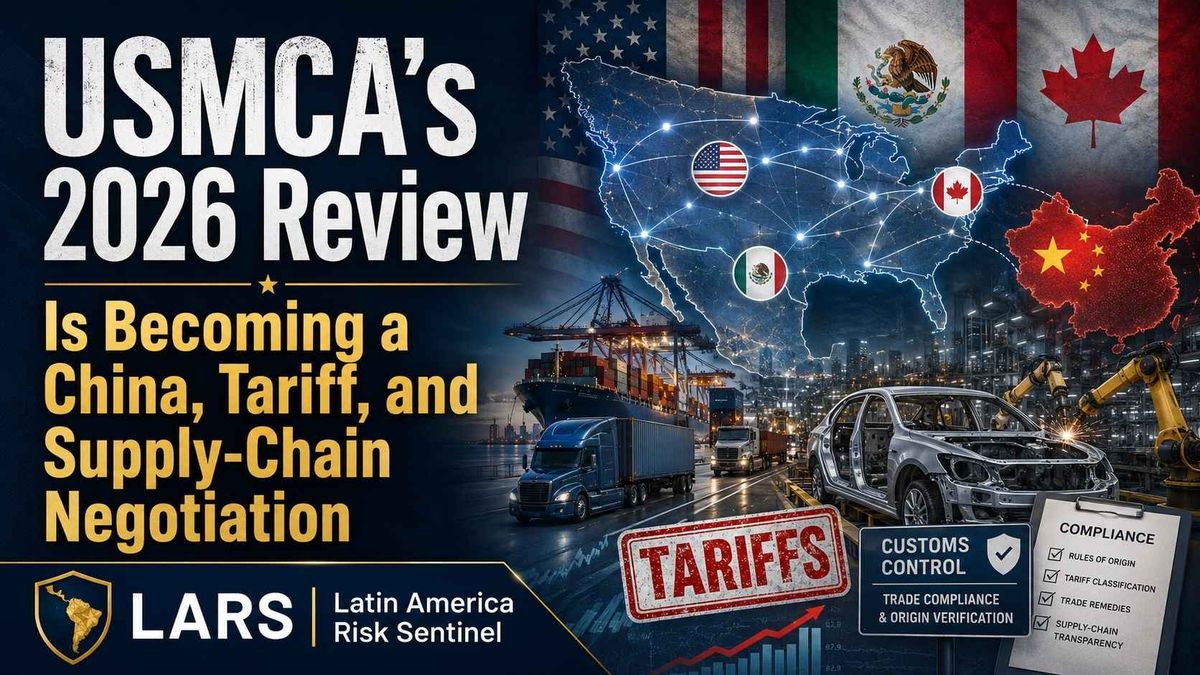
USMCA’s joint review period begins July 1. The pact may survive, but long-term certainty may not.
Signal: The 2026 USMCA review is no longer a routine treaty renewal. Washington is using the review to press for stricter rules of origin, tighter controls on China-linked supply chains, and stronger economic-security commitments from Mexico and Canada.
The agreement is likely to survive in some form because North American trade is too integrated to unwind quickly. The more important business risk comes from prolonged uncertainty, annual reviews, sector tariffs, and new compliance burdens that could alter sourcing, investment, and manufacturing strategy across the region.
Impact: The review affects companies whose cost structure, supply chain, or client strategy depends on North American trade.
Auto parts, agriculture, steel, aluminum, electronics, critical minerals, and cross-border logistics are the pressure points, but the operating effect reaches beyond those sectors.