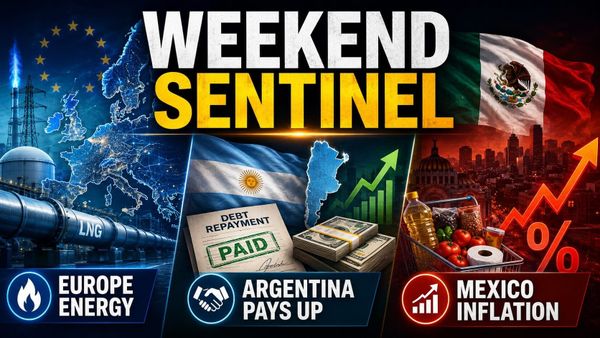
Weekend Sentinel - Europe Energy, Argentina Pays Up, Mexico Inflation
Europe’s energy insecurity is driving the region to emerge as a supplier of clean power, transition minerals, and industrial inputs.
Europe’s energy insecurity is driving the region to emerge as a supplier of clean power, transition minerals, and industrial inputs.
Data centers have become strategic infrastructure. Política Exterior frames them as comparable to ports and oil pipelines because they hold the physical location of the cloud, the data that move through it, and the digital sovereignty states increasingly want to control. Latin America is attracting the interest of data center
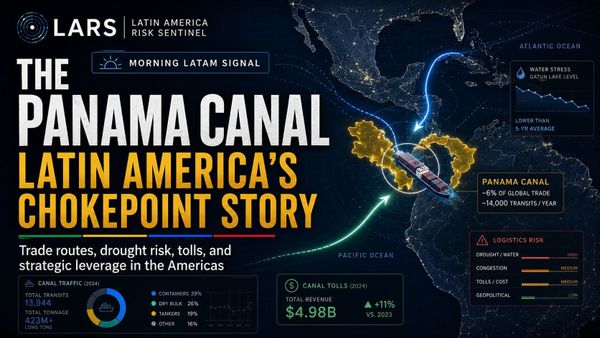
The Panama Canal is Latin America’s clearest equivalent. It is not only a Panamanian asset or a shipping shortcut but a hemispheric logistics hinge that connects Asia, the United States, Latin America, and Europe through one narrow corridor between the Atlantic and Pacific.
China’s June 9 economic and security bulletin from the U.S.-China Economic and Security Review Commission points to a Chinese economy under pressure from weak consumption, falling investment, rising input costs, and a strained export-led growth model. T Tighter capital controls persist with new outbound investment rules,

These three cases are why small and medium businesses need a partner to help them navigate the diverse and fragmented Latin American market.
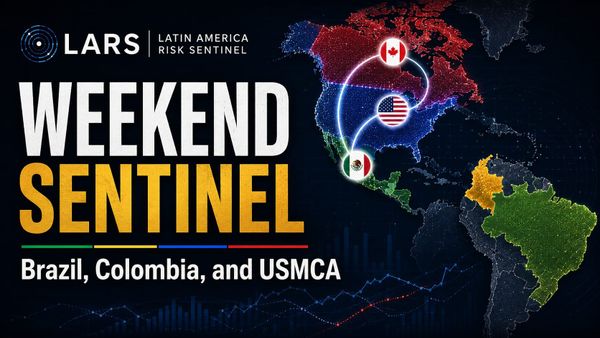
Today, Weekend Sentinel reviews three key Latin America developments: the Iran war’s spillover risks for Brazil, Colombia’s political reset amid strained finances, and renewed Trump-era trade turbulence.
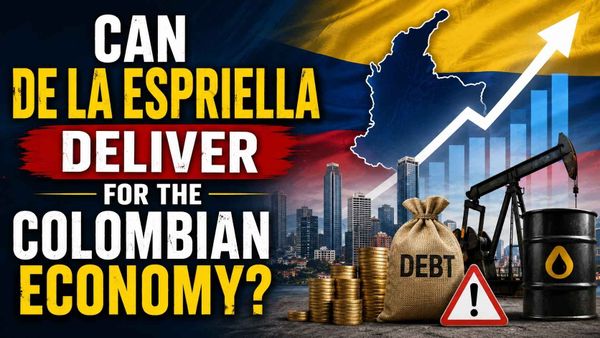
Colombia’s economy has entered a relief-trade moment, not a completed turnaround. Markets are betting that Abelardo De la Espriella can restore confidence, revive investment, and restart hydrocarbons activity.
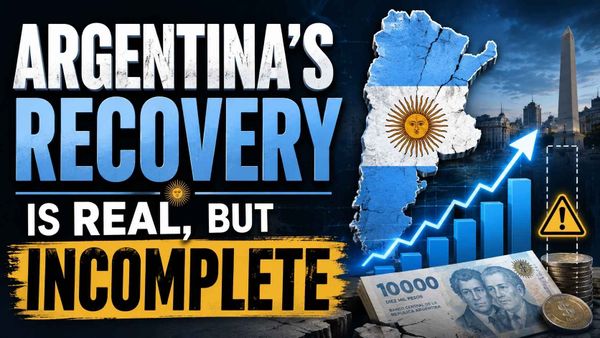
The sharper signal is not whether Milei’s adjustment produced a rebound, but whether stabilization can become durable growth before inflation fatigue, weak consumption, and investor caution slow the political runway.

Beijing is now embedded in Brazil’s space ecosystem through joint satellite programs and radio‑astronomy infrastructure, giving Brazil technical lift while raising Western scrutiny.
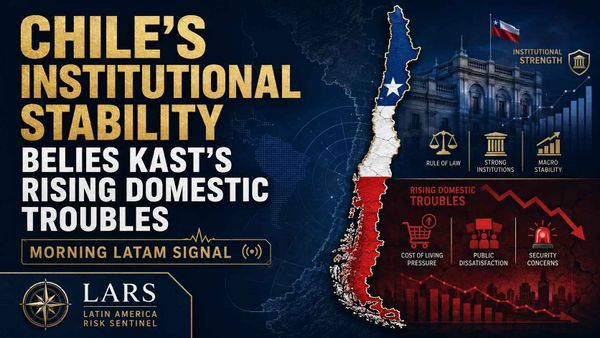
Chile’s small-business stress, household financial pressure, and rising public concern over crime are creating a tougher operating environment for President José Antonio Kast.
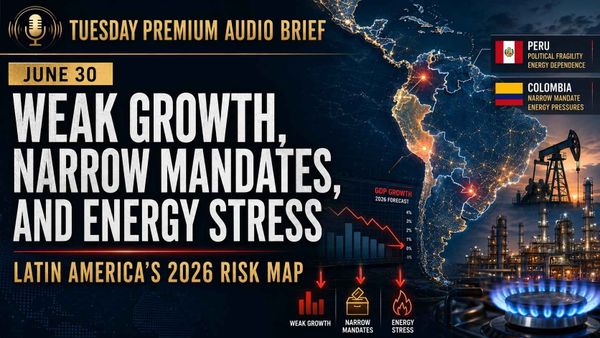
Today's Premium Audio Brief looks at the political and energy stress behind the numbers, from Peru and Colombia’s narrow mandates to the wider risk map investors cannot afford to treat as one market.
Lula and Sheinbaum are strengthening the Brazil-Mexico relationship at the same time that right-leaning governments are advancing elsewhere. That gives both leaders a practical reason to deepen cooperation.
Mexico
Today, learn about: 1) What the new FDI numbers mean for Mexico 2) The key component of Latin America's role in the global AI competition 3) Are the victories of the Latin American Right over? What fueled them?
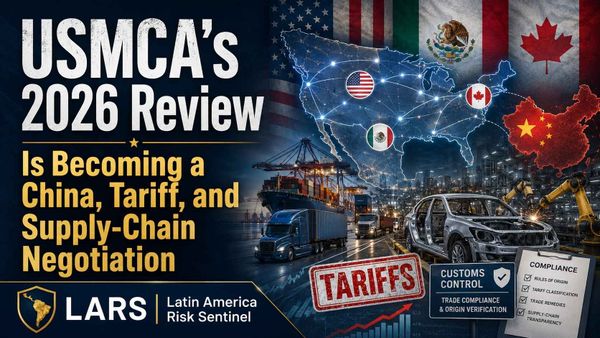
US-LatAm
USMCA is likely to survive, but the 2026 review is changing the logic of North American trade. Washington is not treating the pact as a simple renewal exercise. The United States is using the process to press Mexico and Canada on rules of origin, China-linked inputs, tariffs, and economic security.

Brazil
However, the rate cut boosts President Luiz Inácio Lula da Silva campaign for re-election in October despite the macroeconomic risk.
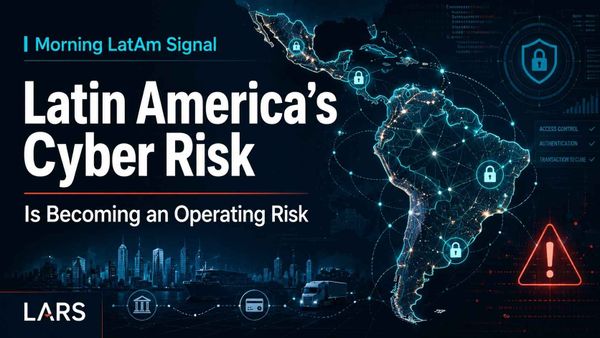
Cyber Risk
Many companies are expanding digital operations in markets where cyber maturity, enforcement capacity, and user awareness remain uneven. The result is a larger gap between digital opportunity and digital resilience.
Colombia Election
The risk for investors is that Colombia now has a president with a narrow mandate, a powerful opposition, and a financial dilemma that will require negotiation almost immediately. De la Espriella has a narrow timetable to deliver on his campaign promises.
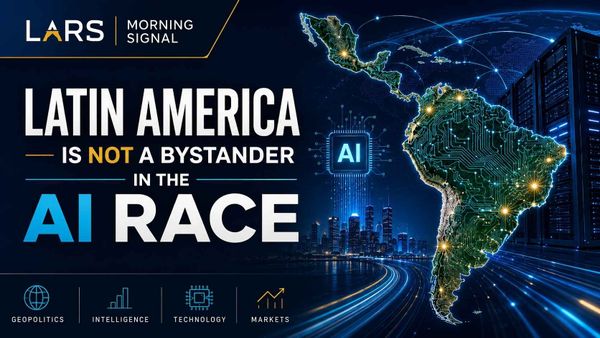
AI Competition
Latin America is not a bystander in the AI race. The region is becoming a strategic infrastructure partner, supplying the energy, land, and connectivity that global AI systems require. The signal is structural participation, not passive observation.
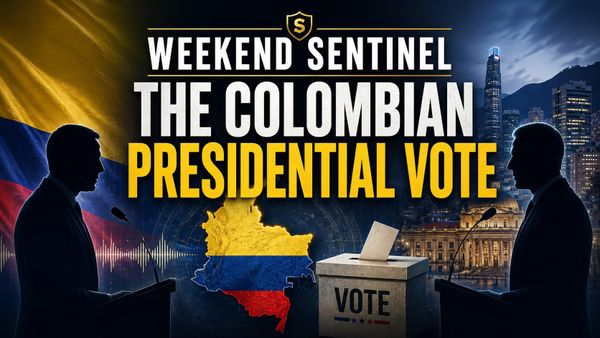
Colombia
Colombia’s runoff pits Petro ally Iván Cepeda against right-wing outsider Alfredo de la Espriella in a race shaped by security, debt, oil dependence, Ecopetrol, and the country’s U.S.–China tilt.
Spain
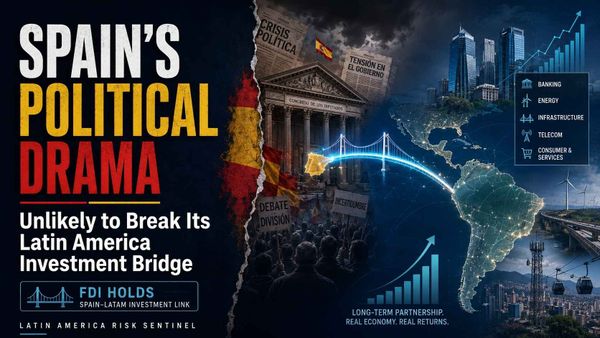
Yet, while this mounting turmoil threatens Madrid's domestic stability, Spain's foundational foreign direct investment relationship with Latin America remains anchored by long-term corporate interests and is unlikely to weaken.
Peru
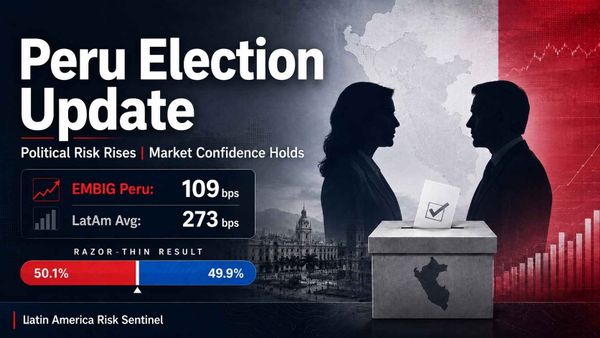
Peru’s election risk is elevated, but the sovereign-credit signal remains contained. Fujimori’s narrow lead gives Peru a near-term legitimacy test.
Guyana
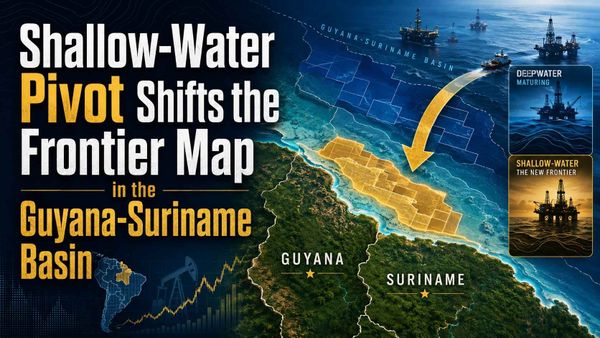
While deepwater operations like TotalEnergies’ $10.5 billion Gran Morgu project anchor long-term volumes, the shallow-water pivot introduces a fast-tracked, lower-cost ecosystem that significantly lowers the barrier to entry for mid-size explorers.

Audio Brief
Argentina’s improving economic data is being overshadowed by scandal. Bolivia’s crisis is reaching a tipping point. And Washington’s “Don-roe Doctrine” is putting US interventionism back at the center of Latin America’s political and commercial map.
Venezuela
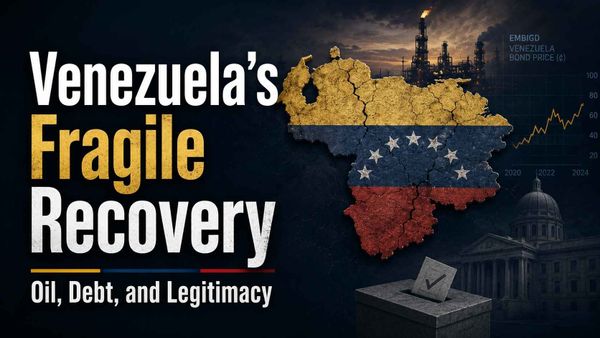
Signal: Venezuela’s oil and debt recovery is gaining momentum after Maduro’s removal, with crude output rising and a major sovereign and PDVSA debt restructuring now underway. Impact: The business risk appears in the gap between energy recovery, creditor negotiations, legal credibility, political legitimacy, and institutional repair. Watchpoint: Track